Airbnb blocking by neighbors represents a strict legal mechanism. It allows apartment building residents to legally ban short-term tourist rentals. This procedure requires exact compliance with voting regulations. Investors must consider this factor when selecting a property. The Spanish real estate market has undergone major changes by 2026. Legislation now regulates the tourism sector much more strictly. Local authorities aim to reduce the burden on housing stock.
Buying an apartment for short-term rental requires a deep audit. Having a license no longer guarantees the absence of problems. Neighbors have gained real leverage over investors' businesses. Legal verification of building documents has become a mandatory transaction stage. Ignoring this step leads to capital loss.
The legislative framework relies on the updated horizontal property law. This normative act defines cohabitation rules in apartment buildings. The state delegated some powers to the residents themselves. Now the fate of a tourism business is often decided locally. An investor must understand the mechanics of making such decisions. Knowing the laws protects capital from unforeseen blockages. Below is a detailed breakdown of current legal norms.
Expansion of Comunidades de Propietarios Powers in 2025
In 2025, Spanish legislation significantly expanded the rights of Owners' Communities (Comunidades de Propietarios). Now communities can preemptively restrict tourist activities in residential complexes. This decision radically changed the balance of power in the market.
Previously, banning commercial activity required the unanimity of all owners. Achieving such consensus in practice was almost impossible. There was always an owner interested in rental profits. The state realized the inefficiency of the old legal model. The housing crisis demanded the implementation of new, flexible regulatory tools. Parliament approved amendments lowering the decision-making threshold.
Owners' communities have turned into a powerful regulatory body. They received the right to independently determine permissible apartment uses. This right is enshrined at the federal level. Local municipalities in Catalonia actively support residents' initiatives. They refuse to issue new licenses if there is a neighborhood veto. Investors face a new legal reality. Now analyzing the mood in the building is as important as profitability.
Expanding powers does not mean complete arbitrariness from neighbors. The law establishes strict procedural frameworks for introducing restrictions. Any violation of the regulations makes the decision invalid. Courts regularly cancel resolutions adopted with procedural errors. Therefore, legal support for transactions has gained critical importance. Specialists check not only the fact of the ban itself. They analyze the legality of the procedure for its adoption.
The Essence of the 60% Rule and Participation Quotas
The 60% Rule means a requirement for a double qualified majority. Three-fifths of the total number of owners must vote for the ban. They must also represent 60% of the total participation Quotas.
Understanding the quota mechanism is critically important for an investor. Each property in the building has its own participation coefficient. It is calculated based on the apartment's area and location. The quota determines the weight of the owner's vote at meetings. A penthouse owner has more weight than a small studio owner. Therefore, a simple count of raised hands does not work. Mathematical confirmation of reaching the 60 percent threshold is necessary.
The voting procedure has specific nuances. The law considers the votes of owners absent from the meeting. If an owner does not appear, they receive an official notification. They have thirty days to express their disagreement. If they remain silent, their vote is automatically added to the majority. This rule significantly facilitates Airbnb blocking by neighbors in practice. The initiative group only needs to mobilize the active residents.
Investors often underestimate the mathematics of voting. They see that few people attended the meeting. It seems to them that the rental ban will not pass. However, the system for counting absent votes works against them. The passivity of the majority plays into the hands of restriction initiators. Therefore, an investment apartment owner must personally attend meetings. An alternative is issuing a power of attorney to a specialized lawyer.
The double majority protects minority rights from spontaneous decisions. Gathering 60% of votes and quotas in a large complex is difficult. This requires serious organizational work from dissatisfied neighbors. Usually, such initiatives arise only when real problems exist. Noisy tourists, garbage, and property damage provoke residents into active measures. Maintaining good relations with neighbors reduces the risk of initiating a vote.
Mechanisms for Introducing a Ban on New Licenses
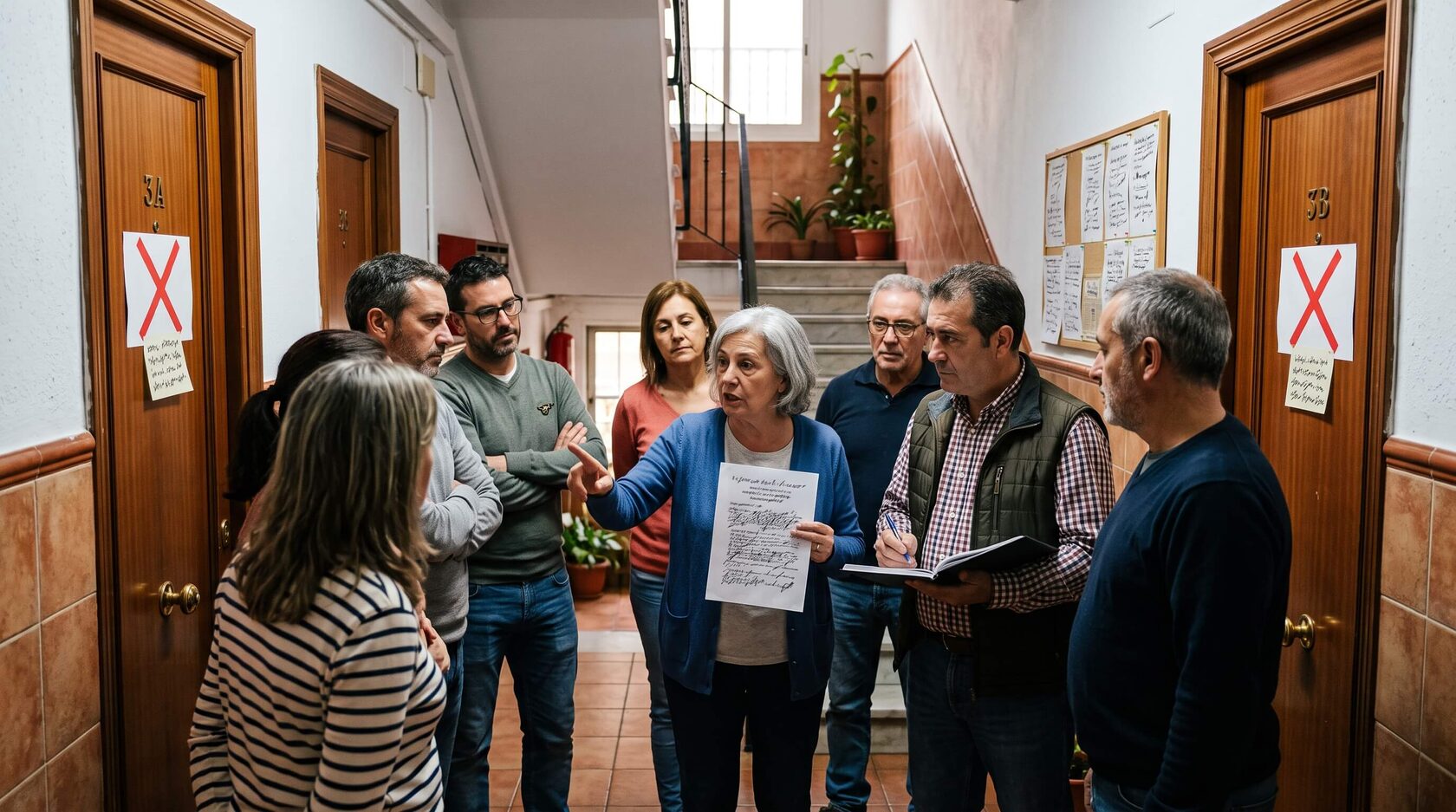
Introducing a ban requires convening an official residents' meeting and including the issue on the agenda. The decision is recorded in the minutes and becomes the basis for changing rules. The procedure is strictly regulated by law.
Initiating the process begins with an appeal to the community president. Any owner can demand to include an issue on the agenda. The president must satisfy this demand when convening the next meeting. Holding an extraordinary meeting is also possible. This requires the initiative of a quarter of the building's owners. They must represent at least 25% of the participation quotas. The meeting notice is sent to all owners in advance.
The agenda must contain a clear formulation of the proposed decision. You cannot vote for a ban if it was not declared beforehand. The wording must directly indicate the restriction of tourist use. Vague phrases about "banning commerce" are often challenged in court. The legal accuracy of the text is crucial. After voting, the secretary draws up the official minutes. The document is signed by the president and sent to all participants.
Procedure for Changing the Statutes (Estatutos)
Changing the Statutes (Estatutos) requires mandatory notarization of the meeting minutes. Only after this do the new rules acquire legal force for the owners. Internal house rules cannot restrict property rights.
Many confuse the building statutes with internal house rules. House rules regulate quiet hours or pool usage. They are adopted by a simple majority of votes. However, they cannot prohibit renting out an apartment. Restricting the right to use property requires changing the statutes specifically. This is the fundamental legal document of the building. Changing it is a complex and expensive process.
The community president takes the meeting minutes to a notary. The notary verifies the legality of the voting procedure. They ensure that the 60% Rule was followed correctly. The correct notification of absent owners is also checked. If the procedure is violated, the notary will refuse to certify the act. This is the first level of protecting investors' rights from illegal neighbor actions. The notarial act (Escritura Pública) secures the new statute provisions.
The notarization process takes from a few weeks to a month. During this period, the community's decision does not yet have full force. An investor might have time to apply for a license. The municipality must consider applications based on current registry data. The speed of action in such situations determines business success.
Registering Changes in the Registro de la Propiedad
Registering changes in the Property Registry is mandatory to enforce the ban. Without this record, new buyers are not bound by statute restrictions. The registry is the main source of reliable information.
The notarial act is transferred to the Property Registry (Registro de la Propiedad). The registrar conducts their own legal examination of the document. They check the decision's compliance with LPH (Horizontal Property Law) norms. The registrar has the right to refuse to make an entry. The reason could be the infringement of basic owner rights. If the check is successful, the ban is entered into the registry. From this moment, it becomes public and mandatory.
The registry's public nature protects bona fide real estate purchasers. If an investor buys an apartment, they request a Nota Simple extract. If the extract mentions no ban, the investor is clear. They have every right to obtain a tourist license. Even if the neighbors voted for a ban a year ago. The absence of a registry entry makes the decision void for new owners. This is a crucial nuance of Spanish real estate law.
The registration process can drag on for several months. Sometimes communities save money and do not take the matter to the registry. They limit themselves to a notarial act or just the minutes. This is a fatal mistake on the part of the residents. Airbnb blocking by neighbors in this case does not work against new buyers. Our brokers often find such "loopholes" for clients. We legally bypass unregistered bans.
Retrospective Effect of Bans: Myths and Reality
The law does not have retroactive effect. Airbnb blocking by neighbors cannot cancel legally operating licenses. They must be obtained before changes are entered into the registry.
Many fears circulate among investors regarding new laws. The main myth is that neighbors can close an already operating business. This is absolutely not true. Article 9.3 of the Spanish Constitution guarantees the non-retroactivity of restrictive norms. If you legally rent out an apartment, the new ban does not affect you. You possess acquired rights (derechos adquiridos). The law protects your current business from encroachment.
However, communities often try to pressure owners of active licenses. They send threatening letters and demand to stop the activity. They refer to new decisions of the residents' meeting. An investor must not succumb to these provocations. It is necessary to send an official legal response. It should point out the illegality of the retrospective application of the statutes. Usually, this is enough to stop the pressure.
Successful Challenge of a Retrospective Ban from an HOA in Badalona. In late 2025, our client faced aggressive actions from neighbors. He owned an apartment with a HUT (Tourist Use Housing) license in Badalona since 2023. The residents' meeting decided on a total ban on tourist rentals. They registered the changes in the registry and demanded the client close the business. The building administrator (Fincas) began issuing fines.
We relied on the principle of non-retroactivity of the law. It was proven in court that the license was obtained before the statute change. The judge fully satisfied our claims. The community's decision regarding our client was declared void. The community was ordered to cancel the fines and pay legal costs. This case confirms the reliability of protecting acquired rights in Spain.
Increasing the Quota for Communal Expenses for HUT (up to 20%)
If the community cannot ban rentals, it has the right to increase payments. HUT owners can have their communal fees raised by up to 20%. This decision also requires 60% of the votes.
The legislator provided a compromise option for conflict situations. If a rental ban is impossible, neighbors can demand financial compensation. Tourists use elevators more actively, take out trash more often, and wear out infrastructure. It is logical that the business owner should pay more. The law allows increasing the share of participation in common expenses. The maximum threshold for such an increase is strictly limited to twenty percent.
The procedure for adopting this decision is identical to the ban procedure. It requires gathering a residents' meeting and obtaining the same 60% of votes. It is important to note that the increase is not applied retrospectively. It only takes effect from the moment the decision is made. The increase applies only to the building's general operating expenses. It does not apply to targeted assessments (derramas) for capital repairs. An investor must factor this risk into their financial model.
Calculating the 20% surcharge often causes disputes. The surcharge is applied to the owner's current quota. If the base fee is 100 euros, the new one will be 120 euros. The community has no right to set arbitrary fixed amounts. Any attempts to collect a "tourist tax" of 500 euros are illegal. Such decisions are easily challenged in court.
How to Check a Building Before Buying an Investment Apartment
Checking a property requires analyzing the Nota Simple extract and a direct request to the administrator. This eliminates the risk of buying an apartment with an unspoken rental ban. A comprehensive audit guarantees investment safety.
The first step is ordering an extended extract from the Property Registry. The Nota Simple will show the presence of officially registered statute changes. If the encumbrances section mentions Article 17.12 of the LPH, the property is problematic. However, a clean extract does not provide a 100% guarantee. The ban decision might be in the registration process. The notary has already certified the documents, but the registry has not updated the data yet.
The second step is communicating with the building administrator (Property Administrators / Fincas). This is a key verification stage that many ignore. It is necessary to request a copy of the current statutes and minutes of recent meetings. You also need to find out about any legal disputes within the community. The administrator must provide this information upon the current owner's request. Therefore, the request is made on behalf of the apartment seller.
Below is a standard request template used by Angel Property brokers. This document allows obtaining an official response from the building administration.
Receiving an official response protects the investor from hidden risks. If the administrator confirms the absence of bans, you can proceed with the transaction. In case problems arise in the future, this document will become evidence. It will confirm the status of a bona fide purchaser. Airbnb blocking by neighbors will not become an unpleasant surprise after purchase. Thorough verification is our agency's standard of work.
Frequently Asked Questions
Resolving disputes requires exact knowledge of LPH norms. Below are answers to the most frequent investor questions. This information will help avoid typical mistakes when managing real estate.
Can neighbors cancel an already active HUT license?
No, neighbors do not have the authority to revoke active tourist licenses. The law strictly protects a previously registered and legally operating business. The license is issued by the municipality, and only it can cancel it. Serious administrative violations can serve as grounds for revocation. For example, systematic noise level exceedance or illegal redevelopment. The residents' meeting decision has no retroactive effect for current owners.
Does the 60% rule apply to seasonal rentals?
No, the 60% Rule regulates exclusively short-term tourist rentals. Seasonal rentals (alquiler de temporada) are governed by the Urban Leases Law (LAU). The owners' community has no right to block medium-term housing rentals. This is a fundamentally different type of economic activity. In 2026, many investors are switching specifically to the seasonal format. It provides stable income and completely eliminates the risk of a neighborhood veto.
What to do if the ban is not entered in the Property Registry?
If the ban is absent from the registry at the time of purchase, ignore it. The new owner has every right to rent the apartment to tourists. The community's decision has no legal force for a bona fide purchaser. Article 34 of the Spanish Mortgage Law protects persons relying on registry data. If neighbors start complaining, provide them with the Nota Simple extract. If necessary, involve a lawyer to draft an official response to the community.
How to challenge a residents' meeting decision in court?
Challenging is possible within three months from the moment the decision is made. The basis is a violation of the convening procedure or direct infringement of owner rights. The lawsuit is filed in the court of first instance at the building's location. An important condition: the plaintiff must not have debts to the community. If you have arrears in communal payments, the court will dismiss the lawsuit. The process can take from one to two years.
Can a tenant vote at a community meeting?
A tenant has no voting rights at residents' meetings. Only the property owner or their officially authorized representative can vote. If an investor lives in another country, they must issue a power of attorney. The document can be issued to a management company or a specialized lawyer. Delegating the vote allows controlling the situation in the building remotely. Ignoring meetings leads to the adoption of decisions disadvantageous to the investor.
How to legally rent out housing if the statutes ban "economic activity"?
A general formulation about banning "economic activity" does not always block rentals. Judicial practice in 2026 requires an explicit indication of a ban specifically on tourism. Courts interpret vague formulations in favor of real estate owners. Renting out housing is considered the realization of property rights, not commerce. However, each case requires an individual analysis of the statute text. Lawyers must assess the risks before submitting documents for a license.
